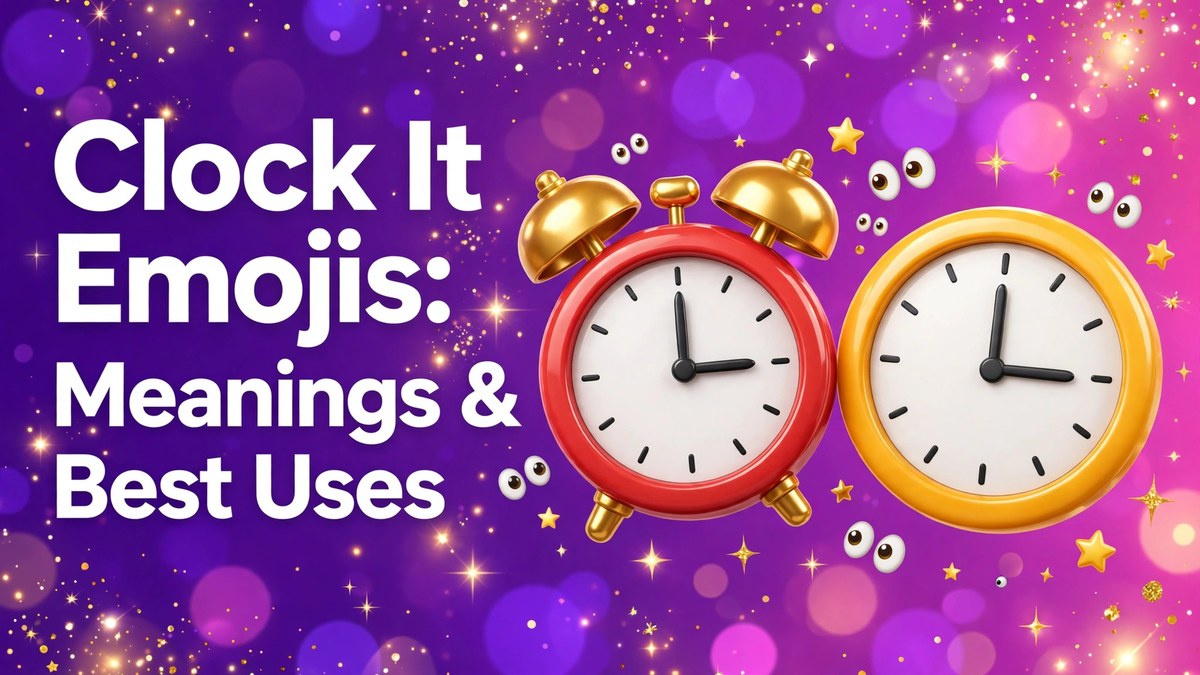
Clock It Emojis ⏰🕒: Meanings & Best Ways to Use
“Clock it” is the Gen Z phrase for noticing the truth and calling it out, and the ⏰🕒 clock emojis are its visual shorthand. Together they can mean “I see what you did there,” “the truth just got exposed,” or simply “it is three o’clock,” and the difference is always in the message around them.
This guide covers what the clock it emojis really mean, the slang roots in ballroom and drag culture, the literal clock meanings, real chat examples, lookalike comparisons, copy-paste combos, and the moments when clocking someone can backfire. Once you learn to read the clock, you will know exactly when to call it out and when to stay quiet.
Unicode: ⏰ U+23F0, Alarm Clock · 🕒 U+1F552, Three O’Clock · Official names: Alarm Clock, Three O’Clock · Also called: clock it emoji, clock emoji · Category: Travel & Places · Added in Unicode 6.0 (2010), Emoji 0.6 (2010)
What does ⏰🕒 mean in texting?
- “I noticed it, and I am calling it out.” The core slang meaning: “clock it” means to spot a detail, a contradiction, or a truth that others missed. A clock after “he said he was busy but posted from the party” says the lie just got exposed, so ⏰ works like a finger pointing at the truth, and it tells the reader that the sender sees exactly what is going on.
- Time, schedules, and deadlines. The second meaning is literal: ⏰ is an alarm clock and 🕒 shows three o’clock, so the emojis mark time, wake up calls, reminders, and appointments. A clock after “meeting at 3” or “set your alarm” says the time matters, and it does it faster than a whole sentence, so the pair is the fastest way to talk about time in a chat.
- Validation and applause. The third meaning is hype: “clock it” also means “you nailed it” or “spot on,” a way to validate someone who just said something true. A clock after a sharp comeback or a perfect read says “yes, exactly, you clocked that,” which makes the emoji a small round of applause for a truth well told.
The clock it reading works because the phrase is so old and so new at once. “Clock” has meant “to notice” in English slang for decades, and the phrase grew up in Black LGBTQ+ ballroom and drag culture, where clocking someone meant seeing through a look or a claim. TikTok carried it further in the 2020s, and the finger thumb tap gesture that goes with it, tapping thumb and finger together like a tiny clap, became a viral move in 2025. ⏰🕒 are the digital version of that same gesture: a clock that says “I see it, I name it, and I am not pretending otherwise.”
Context decides everything with ⏰🕒. After “he is lying about where he was” it means a callout. After “alarm for 6 am” it means a wake up time. After a perfect comeback it means applause. The same clocks can expose a lie, set a reminder, or cheer a friend, so always read the sentence around them before you decide what the sender meant. A clock never changes the words, but it changes how every word is heard, which is exactly why it is so easy to misread.
What ⏰🕒 means by who sends it
From a friend, ⏰🕒 almost always means a playful callout or a shared joke. Friends use it to catch each other in a lie, to point out a red flag, or to hype a good comeback. If your best friend sends “clock it, he was online the whole time ⏰👀” after your crush ignored your text, the clock is the whole joke: it says “we both see the truth, and we are laughing about it.”
From a crush, ⏰🕒 usually means a teasing callout or a flirty test. It turns an ordinary chat into a game of noticing, and it does it lightly, so the sender can point out a contradiction without starting a fight. A clock from a crush is a sign that the conversation is playful and sharp, because the emoji says “I see you, and I like that you see me too.”
From a parent or an older relative, ⏰🕒 usually means the literal reading: time, reminders, or a schedule. Parents use it for wake up calls, appointment times, and “do not be late” messages. The slang callout almost never applies here, which is a useful reminder that the sender matters as much as the symbol: the same clock means something completely different depending on who is behind it.
How to reply when someone sends ⏰🕒
The best reply matches the game the clock started. If it was a callout, own it or laugh it off. If it was a time reminder, confirm the time. If it was hype for your comeback, take the applause. If it was a red flag warning, thank them and think it over. Here are four replies that fit most ⏰🕒 messages:
“Okay, you clocked me, I have nothing to say ⏰”
“Clock it! Exactly what I was thinking 👀”
“Got it, alarm set for 6, see you in the morning ⏰”
“Haha, you see everything, nothing gets past you 🕒”
A good rule is to let the clock do the work and keep your words simple. One ⏰ back says “message received, truth noted” without overcommitting, while a flood of clocks turns a light callout into something heavier than the sender meant. If the clock followed a joke, a laughing reply keeps the friendship warm. If it followed a real warning about someone’s behavior, a thoughtful reply is the cleanest way to show you heard it.
Examples of ⏰🕒 in real chats
Catching a friend in a small lie
Friend: Sorry I missed your call, I was asleep
You: You posted a story ten minutes ago
Friend: Okay fine, I was just lazy
You: Clock it ⏰👀 I knew it
This is the classic ⏰ move: a clock that exposes a small lie and turns it into a joke. The emoji tells your friend you noticed the contradiction, and the reply can be as dramatic as you like because everyone knows it is play.
Hype for a perfect comeback
Friend: He said I could not do it, so I did it twice
You: That is the energy right there
Friend: And I did it in front of everyone
You: Clock it 🕒🔥 you absolutely nailed that
Here ⏰🕒 means validation and applause. The clock adds the hype, and the conversation stays bright because both people are clearly enjoying the win.
A plain time reminder
Friend: Do not forget, the exam starts at 3
You: I know, I am already nervous
Friend: Set an alarm for 2, leave early 🕒
You: Done, alarm is set, see you there
After a schedule message, 🕒 says “the time matters, do not miss it.” It turns a plain reminder into something easy to spot, which is why the clock is the natural closer for a plan.
⏰ vs 🕒 vs 👀: what is the difference?
| Emoji | Meaning | Vibe |
|---|---|---|
| ⏰ | Alarm clock, wake up, deadlines, and the “clock it” callout | Urgent, sharp, loud |
| 🕒 | Three o’clock, a specific time or a time reference | Literal, calm, exact |
| 👀 | Eyes, watching, noticing, “I see what is happening” | Watchful, curious, sly |
Think of it this way: ⏰ is the alarm that says “time is up, and the truth is out,” 🕒 is the clock face that says “this is the exact time,” and 👀 is the eyes that say “I am watching.” The mix-up is common because all three appear in clock it messages, but only ⏰ carries the urgent callout energy, only 🕒 pins down a specific hour, and only 👀 works as a general purpose “I see it” marker. For more on noticing and reading people, our eye roll emoji guide covers the reaction that often follows a callout, our thinking emoji guide explains the face for working out the truth, and our delulu slang guide covers the Gen Z word for the opposite of clocking reality. For the bigger picture of sharp reactions, our mind blown emoji guide explains the feeling when a truth finally lands.
Popular ⏰🕒 combos to copy
- ⏰👀: clock it, I see exactly what is happening
- ⏰🔥: the callout was fire, perfectly said
- 🕒👀: three o’clock, and I noticed everything
- ⏰💅: clock it, and I said what I said
- ⏰☕: clock it, now let us spill the tea
- ⏰👏: applause, you clocked that perfectly
- 🕒⏰: time is ticking, do not miss it
- ⏰🤏: the finger thumb tap, the clock it gesture
- ⏰😭: I clocked it and I cannot stop laughing
- ⏰✨: the truth, but make it sparkle
- 🕒📅: a date and a time, locked in
- ⏰🚨: urgent, clock this right now
Combos work because they pin down the exact flavor of the clock. ⏰👀 says the message is a callout, ⏰🔥 says the callout was perfect, and ⏰☕ says the gossip is coming next. Try your own mixes in our Copy Emojis tool, and if a symbol still puzzles you, decode it with the Emoji & Slang Decoder. For the official details on the slang itself, the Know Your Meme page for Clock It lists the origin, the gesture, and the viral trend in one place.
A small platform note: ⏰ shows a red alarm clock with two bells on most platforms, while 🕒 shows a round clock face with the hands at three, though a few designs change the colors or the style of the hands. The clock is the constant part: wherever you see it, the symbol is telling you that time or truth is on the table. The phrase also has a special life on TikTok and Instagram, where “clock it” under a video means the creator just exposed a lie or nailed a point, which is why the clocks have become a symbol of sharp, honest commentary online.
When not to use the ⏰🕒 emojis
Do not send ⏰🕒 to call someone out in a serious argument, because a clock after a real accusation can read as if you are mocking them instead of listening. It is also the wrong pick for formal work messages, where a slang callout can look rude, and for private confessions, where “clock it” can turn a vulnerable moment into a joke. Save ⏰🕒 for friends, TikTok comments, and light chats where a playful callout is welcome, and keep them out of the messages where the truth needs care instead of applause. The clocks are also a poor choice when you are not sure of the facts, because clocking someone on a wrong guess can embarrass you both.
Frequently Asked Questions
What does “clock it” mean in slang?
“Clock it” means to notice something and call it out, or to validate someone who just said something true. It comes from ballroom and drag culture and went viral on TikTok in the 2020s.
Which emoji means “clock it”?
There is no single official “clock it” emoji. People use ⏰, 🕒, and 👀 together, often as ⏰👀, to show they noticed the truth and are calling it out.
What is the difference between ⏰ and 🕒?
⏰ is an alarm clock for wake up times, deadlines, and urgent callouts. 🕒 is a clock face showing three o’clock, used for a specific time or a time reference.
Final Thoughts
The ⏰🕒 emojis are tiny clocks with a huge job: they turn plain words into callouts, reminders, and rounds of applause, and they change how every sentence around them is heard. Use them where the truth is welcome and the joke is clear, and keep them out of the messages where a clock would turn a real conversation into a performance. One clock says more than a paragraph, but only when the person reading it knows the time has come to be honest.
Leave a Reply