Middle Finger Emoji 🖕 Meaning: What It Really Says
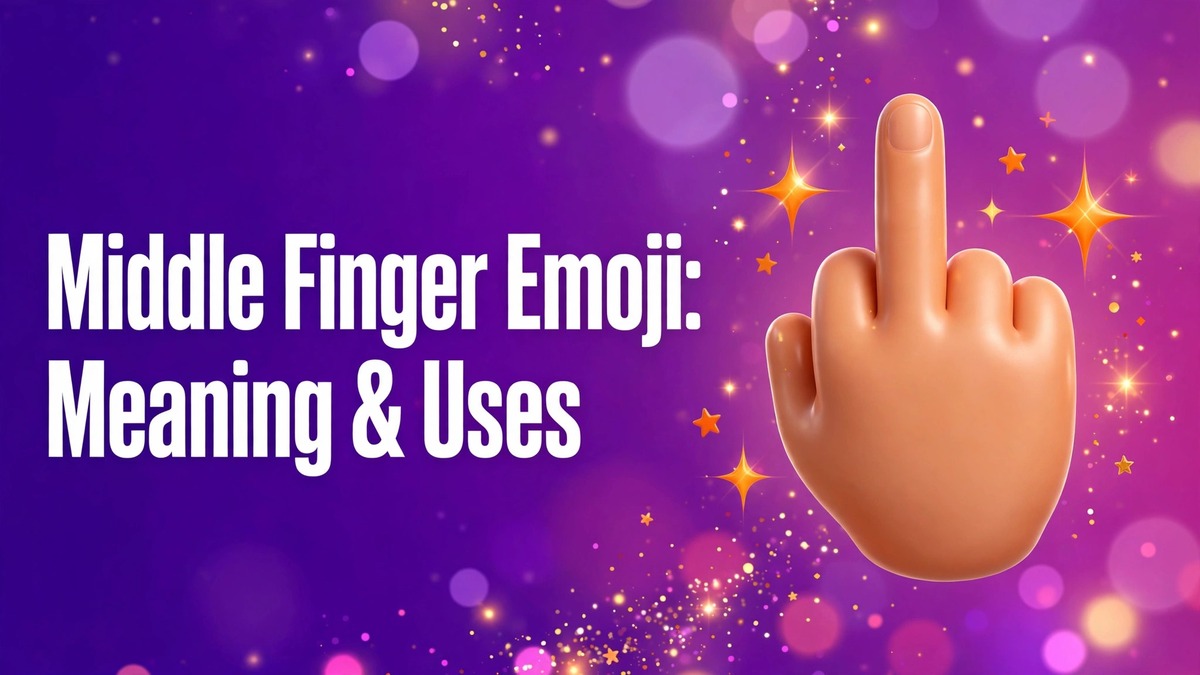
A hand with one finger raised and the rest curled down, the 🖕 middle finger emoji is the bluntest message on your keyboard. It says “no,” “leave me alone,” or “I am done with this,” in a single tap, and everyone who sees it knows exactly what it means.
This guide covers what the middle finger emoji really means, its angry, defiant, and joking uses, real chat examples, lookalike comparisons, copy-paste combos, and the moments when you should never send it. It is a short guide to a very loud symbol, and by the end you will know when 🖕 is a joke between friends and when it is a line you should not cross.
Unicode: U+1F595 · Official name: Reversed Hand with Middle Finger Extended · Also called: middle finger, flipping the bird · Category: People & Body · Added in Unicode 7.0 (2014), Emoji 1.0 (2015)
What does 🖕 mean in texting?
- Blunt rejection. The core meaning: “no,” “go away,” or “I reject that completely.” The gesture is one of the oldest insults in Western culture, and the emoji carries the same force in a text, so 🖕 works as a full sentence on its own when words feel too polite for the moment.
- Anger and defiance. The second meaning is heat: frustration, contempt, or a refusal to back down. After a bad call in a game, a rude message, or a rule that feels unfair, 🖕 says “I am not accepting this” louder than any paragraph could, and the defiance is the point.
- Joking insult between friends. The third meaning is play: close friends send 🖕 as a teasing “get lost” after a lost game, a bad joke, or a friendly roast. Here the emoji is a punchline, not a fight, and the friendship is what makes the insult safe to send.
The middle finger reading works because the gesture is so old and so clear. The raised middle finger dates back more than 2,000 years to ancient Greece, where comic playwrights used it on stage, and the Romans called it the digitus impudicus, the shameless finger. That long history is why the emoji needs no explanation: every reader in the Western world recognizes it instantly, and screen readers announce it plainly as “middle finger,” so the message survives even without the picture.
Context decides everything with 🖕, and the sender matters more than usual. Between best friends after a game, it is a joke. From a stranger after a disagreement, it is an insult. In a group chat it can be a laugh, and in a one to one argument it can be the last word. The same hand can end a friendship or start a laugh, so always read the relationship around it before you decide what the sender meant, and never send it as a first reply to someone you do not know well.
What 🖕 means by who sends it
From a close friend, 🖕 almost always means a joke. Friends use it after losing a game, after a bad pun, or as a reply to a friendly roast, and the insult is the humor. If your best friend sends 🖕 after you beat them at a video game, the right reply is laughter, a rematch, or a 🖕 right back, because the game is the whole point.
From someone you are arguing with, 🖕 usually means the conversation is over. It says “I am done talking” in the bluntest way possible, and it rarely invites a reply. The best move is usually to step back, because answering an insult with another insult only keeps the fight going, and the emoji has already said everything the sender wanted to say.
From a stranger or a troll, 🖕 means provocation. Online, strangers send it to get a reaction, to derail a thread, or to insult someone they will never meet. The smartest reply is usually no reply at all: block, mute, or report if it crosses a line, and save your energy for the people who actually talk to you.
How to reply when someone sends 🖕
The best reply depends on the relationship. If it is a friend joking around, laugh and fire back. If it is an argument, a calm reply or silence ends it faster than a matching insult. If it is a stranger, ignore it. Here are four replies that fit most 🖕 messages:
“Ha, love you too 😂 Rematch?”
“Okay, okay, you win this round 🖕”
“That is enough, let us talk when we are both calm”
“Nice. Very mature 😂”
A good rule is to match the friendship, not the finger. One 🖕 back to a best friend keeps the joke going, while a 🖕 back to an angry stranger only feeds the fight. If the message was a joke, a laughing reply keeps the friendship warm. If it was an insult and you are hurt, a short calm line or no reply at all is stronger than any emoji you could send back.
Examples of 🖕 in real chats
Joking after losing a game
Friend: I won again, you are terrible at this game
You: 🖕 Rematch, right now
Friend: Bring it on, same result 😂
You: We will see about that, loser buys pizza
This is the classic 🖕 move between friends: a fake insult that means “good game, let us go again.” The emoji tells you the friendship is solid enough to take the joke, and the reply can be as bold as you like because everyone knows it is play.
Reacting to a terrible traffic jam
Friend: How is the drive going
You: Stuck for an hour, this traffic 🖕
Friend: Oh no, want me to order food for when you get home
You: Yes please, I am starving 😩
Here 🖕 is aimed at a situation, not a person. The finger points at the traffic, the delay, and the bad luck, and the friend reads it as frustration, not an attack, which is why the reply is sympathy and food.
Brushing off a rude comment
Friend: Someone in the comments said your video was boring
You: Cool, tell them I said 🖕
Friend: Ha, I already did, in nicer words
You: Good, let us not give them more attention
After a rude comment, 🖕 says “that opinion does not matter to me.” It is defiance as a shield, and the best use of the emoji is often exactly this one: a short, private dismissal that lets you move on without a public fight.
🖕 vs 👍 vs 🙄: what is the difference?
| Emoji | Meaning | Vibe |
|---|---|---|
| 🖕 | Middle finger, blunt insult or defiant rejection | Rude, bold, final |
| 👍 | Thumbs up, approval or agreement | Positive, easy, friendly |
| 🙄 | Eye roll, annoyance or disbelief | Exasperated, dismissive, mild |
Think of it this way: 🖕 is the loudest reaction on the keyboard, 🙄 is the annoyed sigh, and 👍 is the easy yes. The mix-up is rare, because nobody confuses a raised middle finger with a thumbs up, but the three sit on the same scale of approval: 👍 says “great,” 🙄 says “really?,” and 🖕 says “absolutely not.” For the milder side of annoyance, our annoyed emoji guide covers the faces that say “I am done” without the insult, and for the classic positive reply, our thumbs up emoji guide and high five emoji guide cover the reactions that keep a chat friendly.
Popular 🖕 combos to copy
- 🖕😂: the insult was a joke, we are all laughing
- 🖕😤: angry, and not hiding it
- 🖕🙄: annoyed beyond words, rolling my eyes too
- 🖕🎮: you lost the game, deal with it
- 🖕🚗: aimed at the traffic, not at you
- 🖕😎: too cool to care, and proud of it
- 🖕💅: unbothered, polished, and done with this
- 🖕🔥: the argument just got heated
- 🖕✌️: peace out, I am leaving this chat
- 🖕🤷: I do not care, and I am not pretending to
- 🖕😴: boring, wake me when it matters
- 🖕🎤: mic drop, conversation over
Combos work because they pin down the exact flavor of the insult. 🖕😂 says it was a joke, 🖕😤 says it was real anger, and 🖕💅 says you are unbothered and moving on. Try your own mixes in our Copy Emojis tool, and if a symbol still puzzles you, decode it with the Emoji & Slang Decoder. For the official details on the gesture itself, the Dictionary.com page for the middle finger emoji covers the history, the name, and the 2014 Unicode approval in one place.
A small platform note: 🖕 shows the back of a hand with the middle finger raised on most platforms, and it supports all five skin tone modifiers, so 🖕🏽 and the other variants mean exactly the same thing in a different skin tone. One notable gap: the emoji is still missing from the Windows native emoji picker, even though Microsoft has supported the design since 2015, so Windows users often type it from a phone or copy it from the web instead. The gesture is the same everywhere, which is why the emoji is understood in almost every country, even where the spoken insult would be different.
When not to use the 🖕 emoji
Do not send 🖕 to a boss, a teacher, a client, or anyone at work, because a middle finger reads as an insult even when you meant it as a joke about a deadline, and it can cost you a job, a grade, or a client. It is also the wrong pick for a first message, a family group chat, or any serious conversation, where the finger ends the discussion instead of moving it forward. Save 🖕 for close friends who know your humor, for jokes about a game or a traffic jam, and for private moments where the insult is clearly play, and keep it out of every message where a middle finger would be remembered longer than the joke.
Frequently Asked Questions
What does 🖕 mean?
🖕 means a blunt insult or rejection: the raised middle finger, used to say “no,” “go away,” or “I am done with this.” Between close friends it can be a joke, but everywhere else it reads as rude and final.
Is it rude to send 🖕?
Yes, 🖕 is one of the rudest emojis, and it is meant to be. It is only safe between close friends who know it is a joke, and it should never go to work contacts, teachers, family chats, or strangers.
What is the Unicode codepoint for 🖕?
The middle finger emoji is 🖕, officially “Reversed Hand with Middle Finger Extended,” at U+1F595, approved in Unicode 7.0 in 2014 and added to Emoji 1.0 in 2015. Its shortcode is :middle_finger:, and it supports skin tone modifiers.
Final Thoughts
The 🖕 emoji is the loudest symbol on your keyboard: a blunt no, a defiant stand, and a joke between friends, all in one raised finger. Use it where the friendship can take the joke and the target is a game, a traffic jam, or a bad take, and keep it out of every chat where a middle finger would do real damage. The finger is only funny when everyone in the chat already knows you are joking.